Verified note
“My fiddle leaf fig has finally stopped dropping leaves. It is the first time I have seen consistent growth in two years.”
Botanical diagnostic · Field guide 01
Most plant parents blame watering or sunlight, but the real culprit is often a silent nutrient deficit that standard care ignores.

Leaf check
Read the signs before you feed
Pale new growth can point to a nutrient issue, not simply too little light. Check the lower leaves for yellowing patterns.
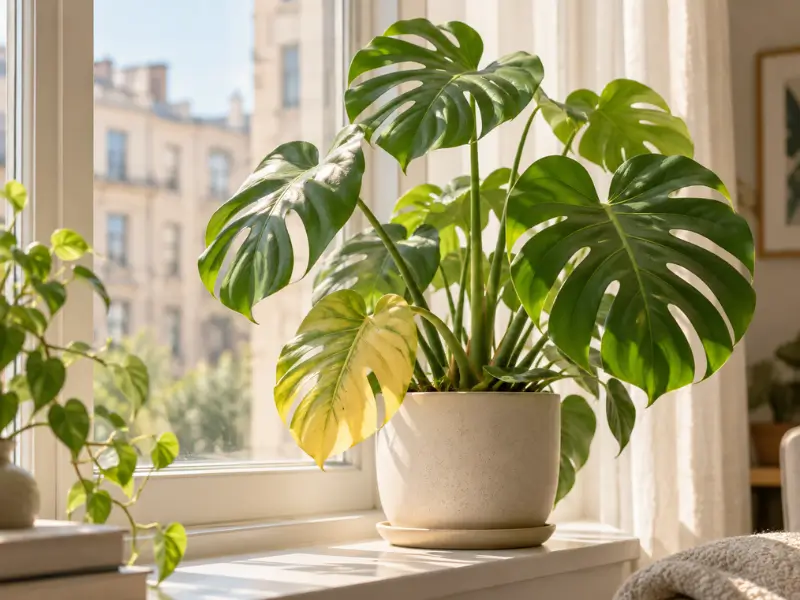
Lower-leaf yellowing can signal nutrient shortage, not thirst. Check the roots before watering again.
Botanical diagnostic · 01
When lower leaves turn pale, it is rarely a thirst issue. Many plant owners reach for the watering can the moment they see discoloration, but this often accelerates the very problem you are trying to solve.
Warning sign 02
Adding more water does not fix a broken diet. When you rely solely on hydration for a plant that is actually starving for minerals, you create a cycle of decline that is difficult to reverse.
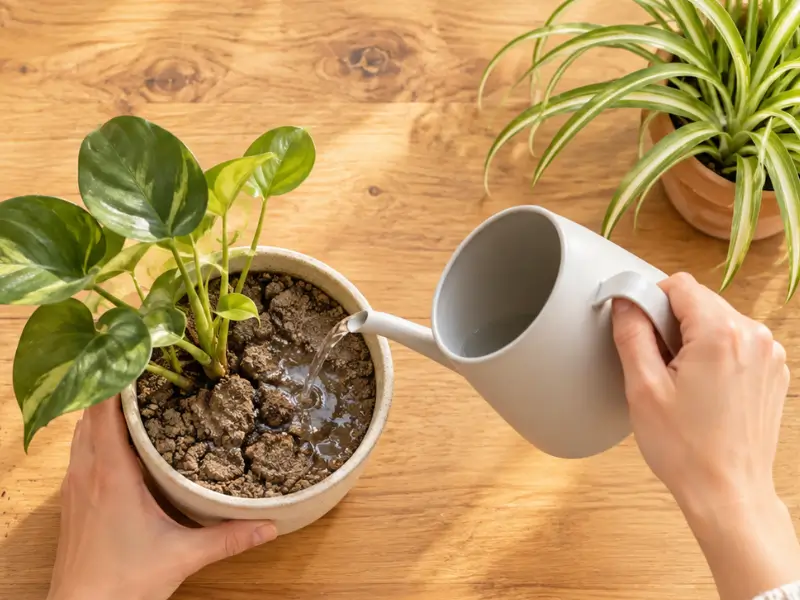
Waterlogged soil prevents roots from breathing, causing them to rot even when the plant looks thirsty.
Warning sign 03
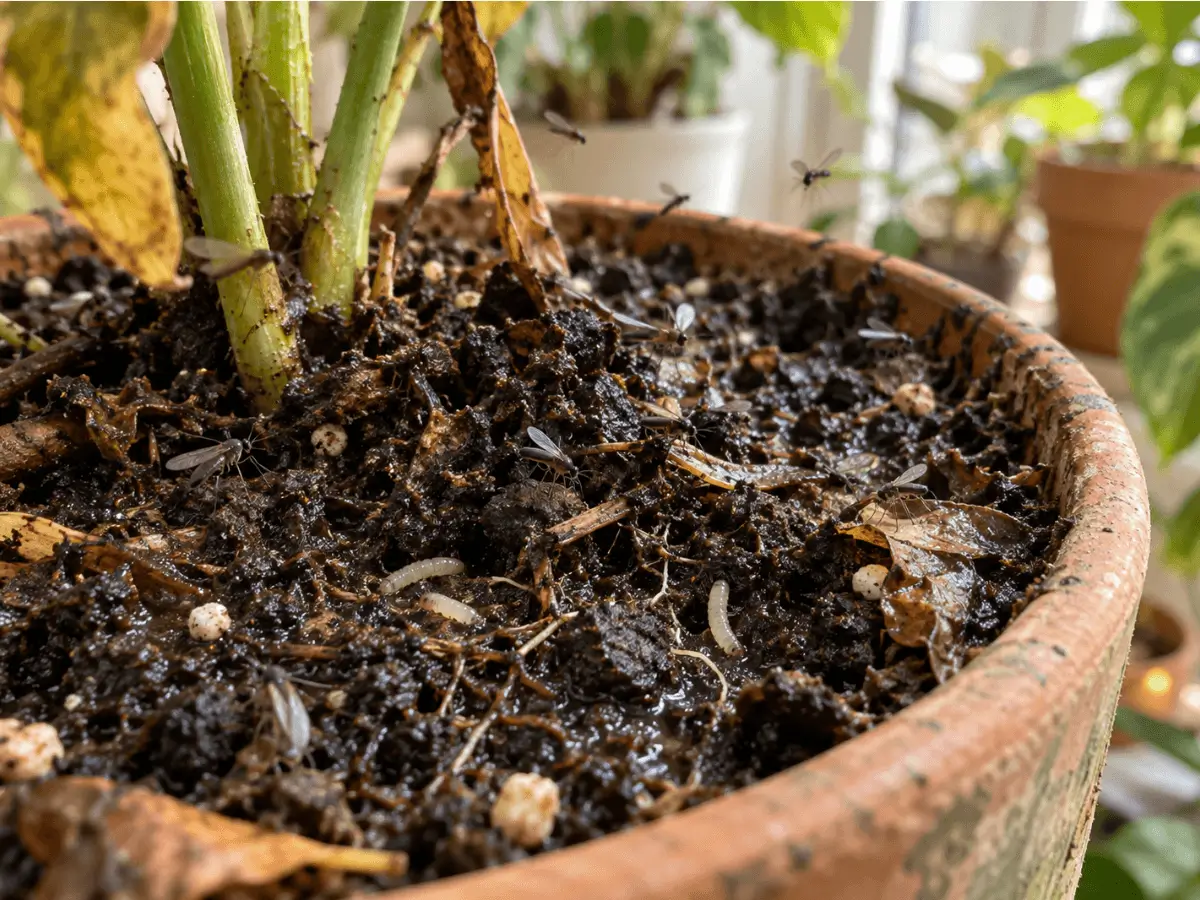
Field note · inspect the soil surface
Tiny pests are often an external sign of internal soil imbalance. When your soil lacks the proper mineral density, it becomes a breeding ground for opportunistic insects.
Unbalanced soil attracts pests: Nutrient-depleted soil loses its natural resistance, inviting unwanted visitors.
Organic matter breakdown: Improperly nourished plants struggle to maintain their root health, creating habitats for larvae.
Pesticides treat symptoms only: Treating the air does nothing for the root cause of your soil's nutritional deficiency.
A visible warning sign
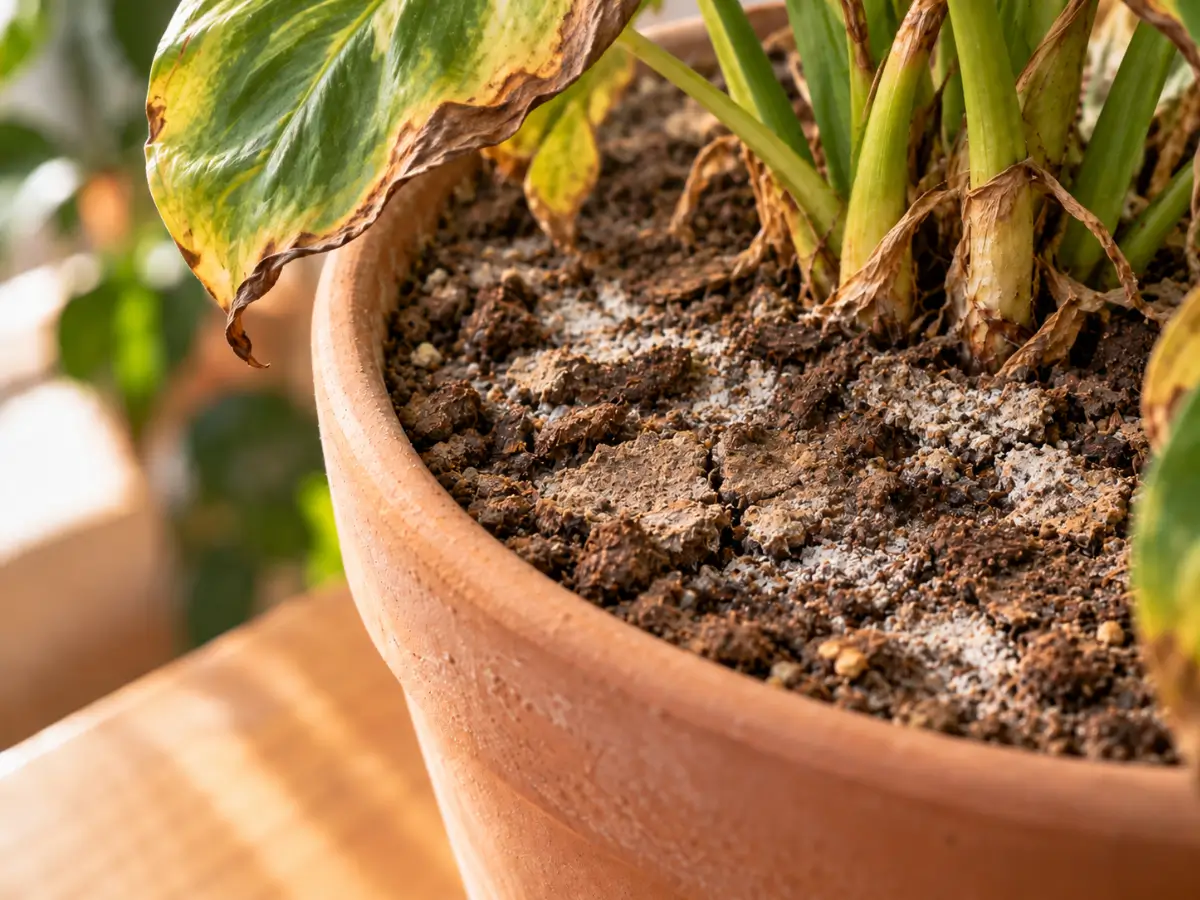
Surface clue
Mineral crust
A chalky ring signals salts collecting where water evaporates, not just a cosmetic stain.
Root-zone impact
Water can’t move freely
The buildup can make it harder for moisture to reach root tips evenly.
Botanical diagnostic · hover or focus the markers
A white ring around your pot rim is not just hard water. It is a visual indicator of a deeper issue that affects how your plant breathes and drinks.
WHAT YOU ACTUALLY WANT TO SEE
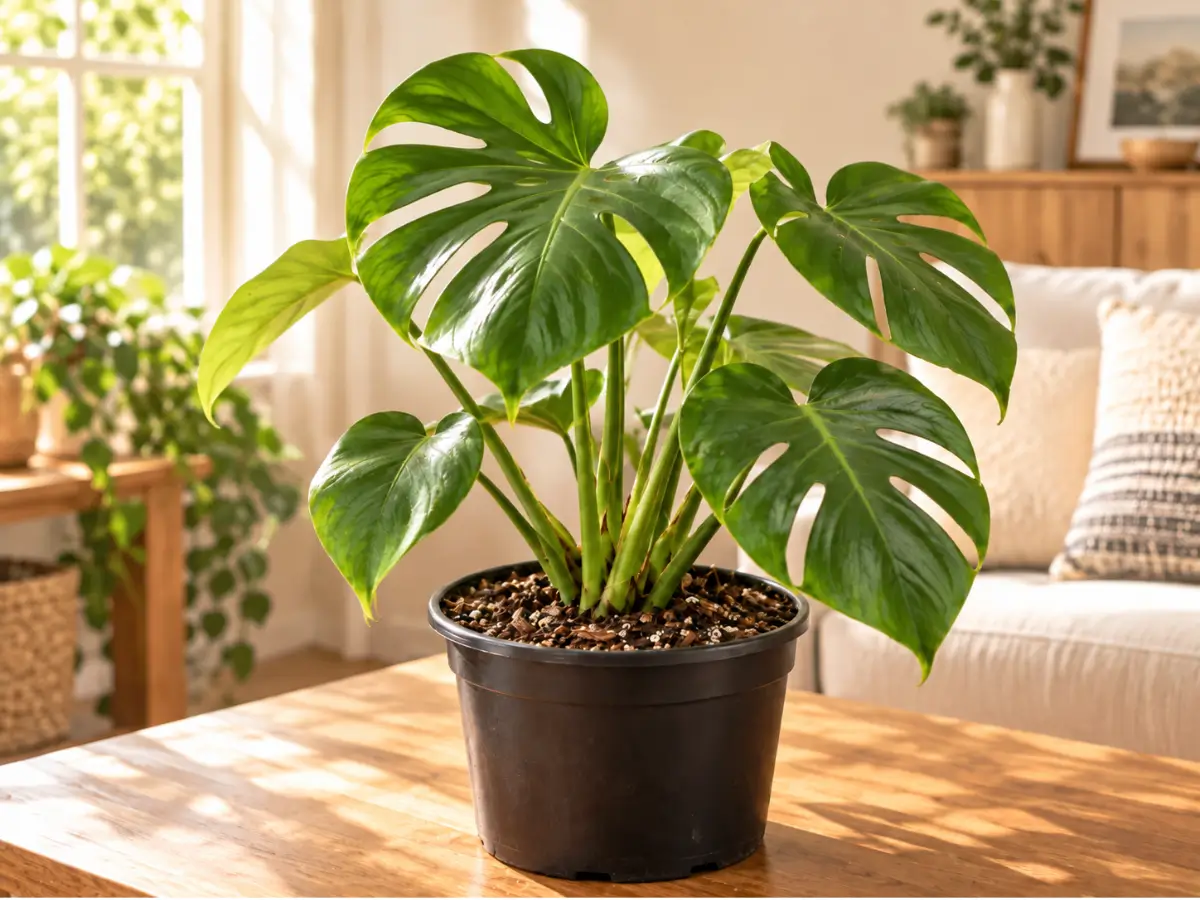
After all those warning signs, here's what you actually want to see. A plant with healthy-looking leaves. Soil that absorbs water normally. And a watering routine that feels predictable.
In the winning video, the example is simple: soil that dries out in about a week. Not overnight. Not sitting soaking wet for two weeks.
Of course, every plant is different. But the goal is the same: consistent care, healthy growth, and fewer problems to troubleshoot.
And one important part of that routine? Making sure your plants get the nutrition they need.
The new approach
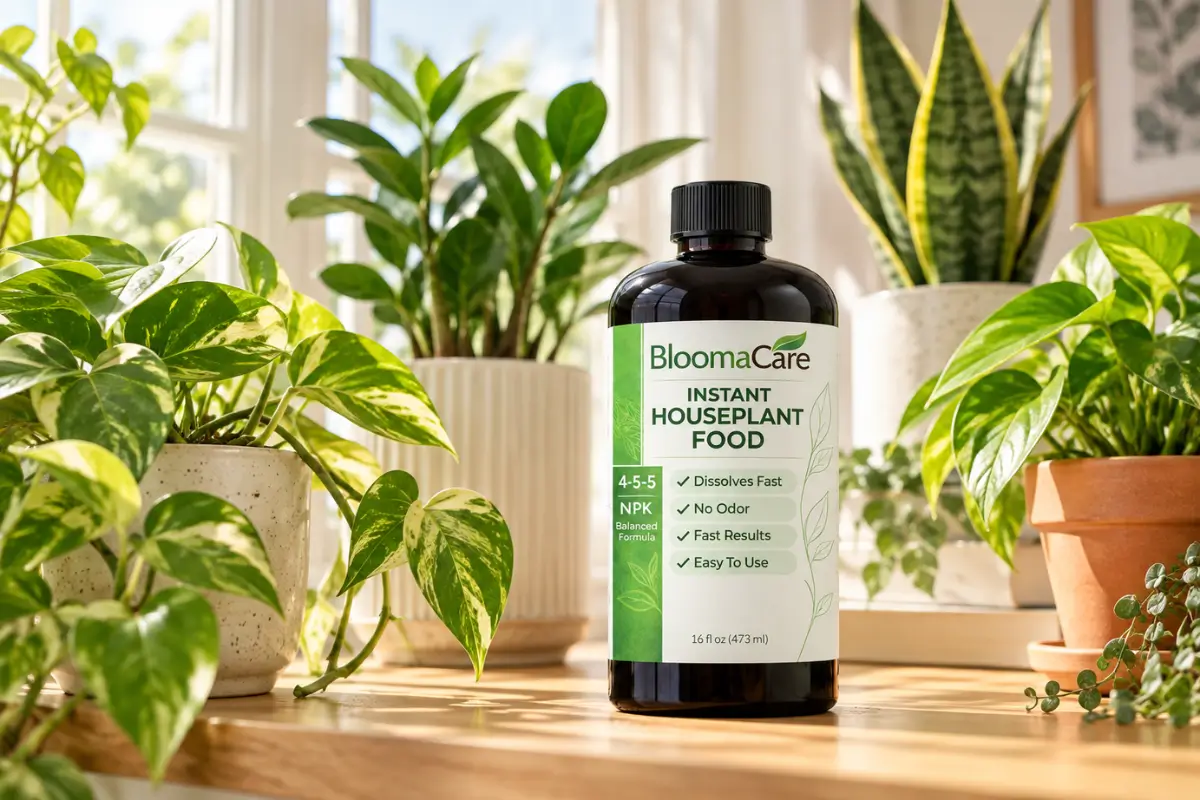
We developed a liquid formula that restores balance without the guesswork.
Most indoor plants fail not because of a lack of care, but because of a lack of consistent, accessible nutrition. In the wild, plants thrive on a cycle of nutrient replenishment, yet our indoor potting mixes are often depleted within months of purchase. We designed BloomaCare to bridge this gap, bringing professional-grade horticultural expertise into your home through a simple, once-a-week routine.
We believe that plant health should be intuitive. By removing the complexity of measuring dry fertilizers or guessing the NPK ratios required for different species, we have created a singular, balanced solution. Our formula integrates seamlessly into your existing watering schedule, ensuring that your plants receive exactly what they need, exactly when they need it.
This is more than just plant food. It is an invitation to stop worrying about the signs of starvation and start enjoying the growth you have worked so hard to cultivate. With BloomaCare, you are not just watering your plants; you are actively fueling their vitality.
The BloomaCare ritual
Apply, absorb, thrive. A simple routine for leaves that look and feel more resilient.
01
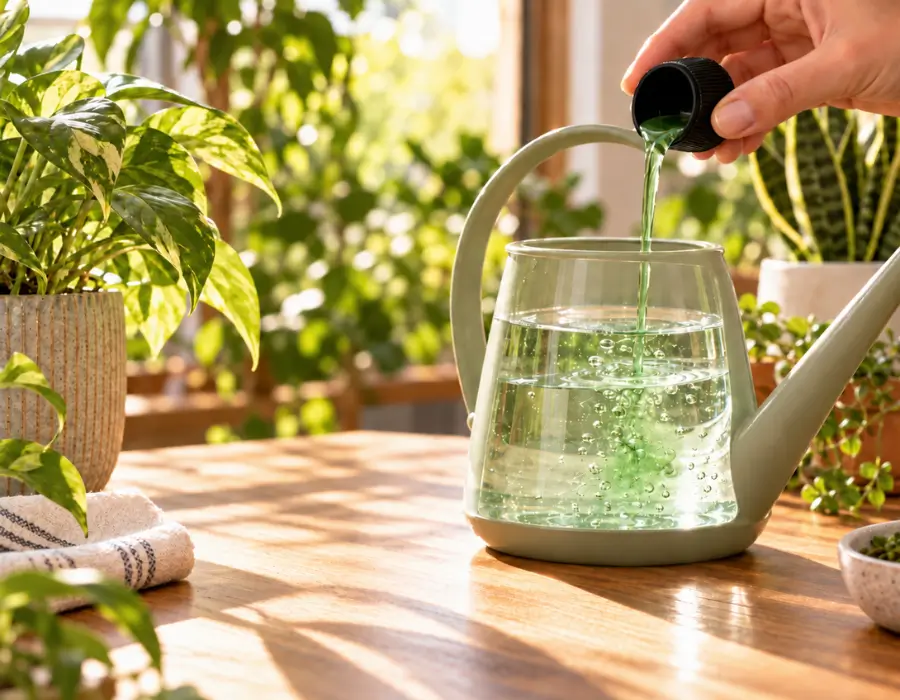
Mix 1–3 capfuls of BloomaCare into your watering can. The balanced formula dissolves instantly.
02
Water your plants as usual. Our formula penetrates deep to deliver nutrients directly to roots.
03
Watch your plants respond with vibrant growth and healthier, more resilient leaves.
A quieter way to care
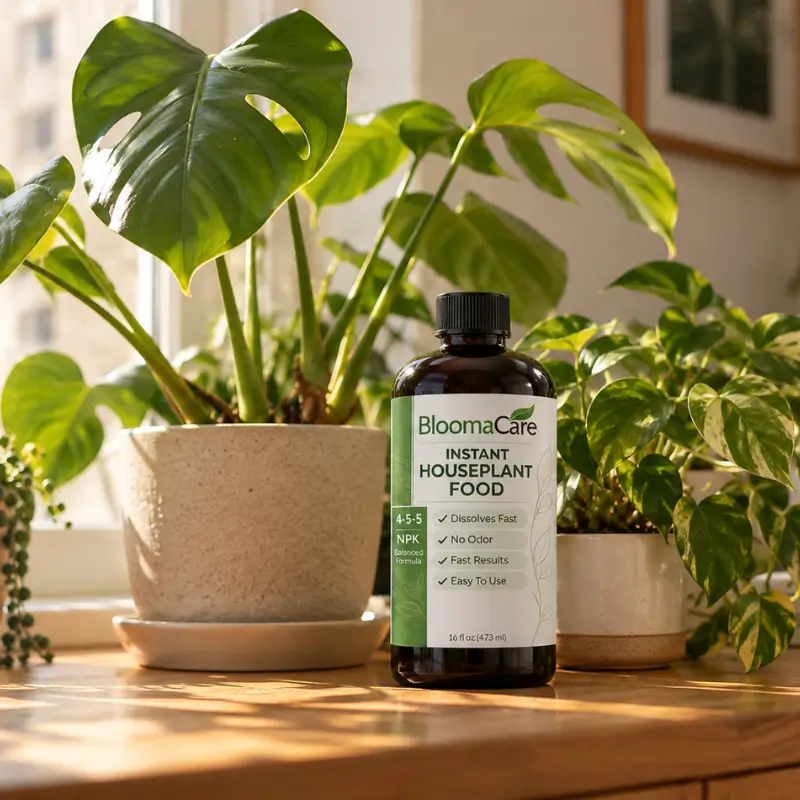
Spend less time second-guessing every yellow leaf and more time enjoying a home that feels alive. A steady care routine gives you a calmer, more welcoming space.
From the plant journal
See why experts and enthusiasts alike choose BloomaCare.
“My fiddle leaf fig has finally stopped dropping leaves. It is the first time I have seen consistent growth in two years.”
“BloomaCare makes the science of plant nutrition so simple. I just add it to my weekly watering and watch them thrive.”
“I recommend this to all my clients. It is the secret to keeping our staging plants looking vibrant and lush all year long.”
Botanical diagnostic
Feed before pale new growth becomes a dropped leaf.
A simple reset for tired plants
Don't wait for another leaf to drop. Begin a simple feeding routine today and give your indoor garden the support it has been missing.
See the feeding optionPlant care notes
Everything you need to know to feed your plants with confidence.
For most indoor plants, we recommend a weekly feeding routine. Simply mix one capful of BloomaCare per gallon of water. This consistent, diluted approach provides a steady stream of nutrients that mimics the natural environment and prevents the nutrient spikes that can stress your plants.
Yes, our balanced 4-5-5 NPK formula is designed to be gentle and effective for a wide range of indoor varieties, from lush tropicals to resilient succulents. If you have a particularly sensitive species, you can start with a half-dose to observe how your plant responds to the added nutrition.
Not at all. We understand that your plants live in your living space, so we formulated BloomaCare to be completely odorless. You can feed your indoor jungle without worrying about any lingering scents or chemical smells in your home.
A single 16 fl oz bottle of BloomaCare is highly concentrated and makes up to 55 gallons of nutrient-rich water. Depending on the size of your collection and your watering frequency, one bottle typically lasts the average plant parent several months of regular, healthy growth.
Still have questions? Our team of plant experts is here to help. Contact us at support@bloomacare.com for personalized advice on your specific plant collection.

Botanical diagnostic
Look for firm, richly colored leaves, an easy sign your plants are getting the nourishment they need.
A healthier ritual for home
Start with a simple, consistent source of nourishment and make plant care feel more rewarding from week to week.